
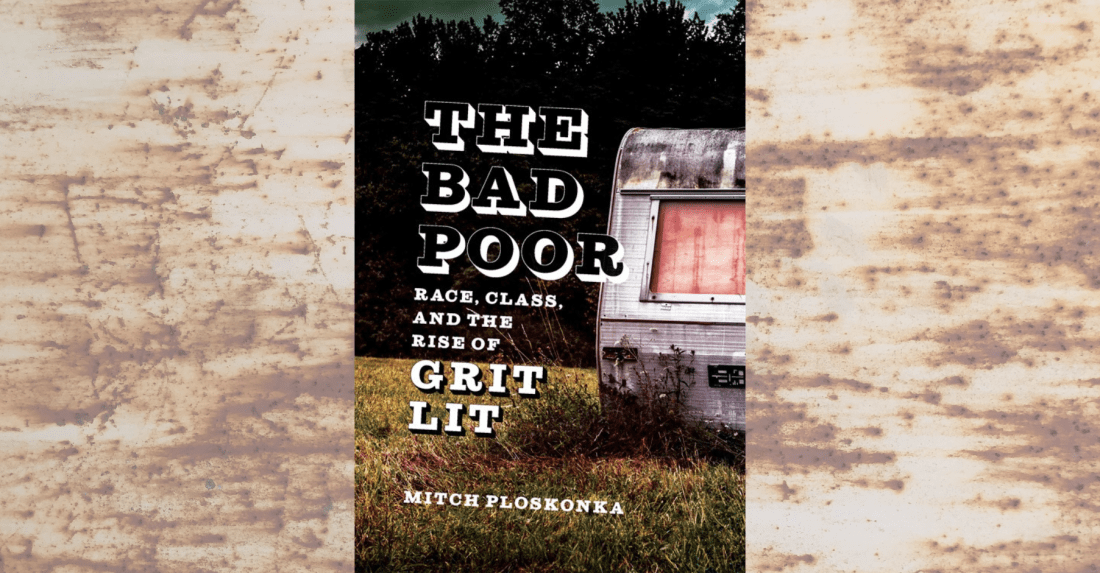
Mitch Ploskonka dives deep into a genre of contemporary literature seeking to embody harsh and hardscrabble existence in The Bad Poor: Race, Class, and the Rise of Grit Lit. His survey of this style uncovers the broken, sharp pieces of identity embedded deep in the South’s downtrodden white folk.
As a reader, capturing Grit Lit’s essence is elusive. Ploskonka nails down a framework that helps us know it when we see it. He starts the book with, “…Grit Lit is characterized by its inward-facing exploration of self-definition – a literature that interrogates identity while grappling with the sociohistorical baggage of poor white representation.” While this is a solid start, he’s quick to point out that, “Grit Lit does more than just combat ingrained stereotypes; it actively works to change perceptions of a diverse and dynamic culture while highlighting and combating the hate that still resides there.”
Ploskonka turns to some of the biggest names of this genre to illustrate how they write into the fissures that let truth leak through. Harry Crews, Larry Brown, and Dorothy Allison are emblems who embody the power, and limitations, of this type of literature. Beginning with Crews, Ploskonka details how the writer’s upbringing and early writing career welded together raw authenticity with insecurity to birth a movement which went national. “There is no ‘true’ Crews, as such, and this is key to understanding Grit Lit and its place within southern literature and culture,” Ploskonka writes. The tension created between “authenticity and performance” in Crews’ writing does more to circumscribe the experience of the poor, white Southerner than a messy definition. Boiling this mash down further, separating the poetic from the historical, would likely lead to “to the erroneous misconception, or myth, that the South can be distilled down to an essence.” This is why, “southern literature is a collection of ‘fake’ Souths that document variations of a ‘real’ South that was never real to begin with.” Using Crews, Ploskonka dictates that the lie is necessary to tell the truth.
The raw naturalism of Larry Brown creates atmosphere where masculinity of the poor Southern white man can be threshed. Ploskonka uses Brown’s first book Dirty Work to dig through how disability often manifests in Grit Lit and how Brown juxtaposes it against Southern white masculinity. He notes this novel “casts disabled white masculinity as more tragic and more pathetic than other kinds of disability because it is ‘crippled’ by its rigid devotion to hegemonic masculinity.” The fragility here is due to an identity collapsing under its own weight. Brown also tiptoes into the realm of race relations with the two veterans of the book. While they can connect over their shared time in the Vietnam War, and how disability has impacted their sense of self, Brown “shows that color is always present; it can never be conflated with someone else’s experience or ignored entirely.” There are moments when it appears the characters can be more than they were; however, naturalism wins out in the end, trapping characters into stagnation: “He gives us the glimmer of something hopeful and then transforms it into tragedy. In the novel, masculinity, disability and race remain segregated.”
Dorothy Allison fills in many of the gaps left by Crews and Brown. Using autobiographical fiction with an intersectional realist lens, Allison broke out onto the literary scene with Bastard Out of Carolina. This chapter starts with how Allison was as much of (if not more) an activist as she was a writer. Maybe because of this, she tackles concepts like racism, queer theory, and feminism more actively. Ploskonka writes about how Allison brought readers down to eye-level in portraying this difficult life: “She also lowers the focus of feminist realists from the domesticated upper-class ‘New Woman’ to the lower-class, undomesticated woman” … “she brings that focus prestige.” And the intersection of her protagonist’s various facets creates space for deeper exploration of what it means to be poor and white in the South. According to Vincent King, her main character, Bone, must “accept the ongoing burden of generating identities/stories for herself.” With self-definition being a major part of the plot, Ploskonka meticulously unpacks the ways Bastard Out of Carolina accomplishes the tasks this whole writing style aspires to. He makes a good case for why Allison moves Grit Lit “further into the upper echelon of literary prestige.”
Before completing the trek through these authors’ insights, Ploskonka devotes a chapter into how poor white racism contributes to Grit Lit. Often writers will attempt nullify the effects of racism by using class to explain it away. As Ploskonka puts it, “The conflation of poor whites and Blacks reflects the anxiety that a poor white population inflicts on a system of white supremacy. How could they be poor and white?” The answer is either they can be “not quite white,” or they can escape the racist system. Then the “distance affords them a clearer lends to analyze their dirty pasts.” Throughout this chapter Ploskonka cites several authors like Jim Grimsley, Rick Bragg, and Tom Franklin who have tried to destroy the myths around white supremacy using tools like rejection and parody.
In this book’s conclusion, Ploskonka uses authors like Brian Panowich, Ron Rash, and Janisse Ray to show how this journey through Grit Lit has refracted through the style, how romanticism for the past has been handled, and even how environmentalism could shape the future of this literary movement. These writings have, “moved away from the self-reckoning that strongly informed the first couple of generations and toward either an explicit turn toward (usually environmental) activism or it has leaned further and further into romanticizing the anti-romanticization of poor white culture.” A good example of this would be A History of Heartache by Patrick Strickland. But Ploskonka has spent an entire book depicting this writing as an evolution rather than a definition. “Grit Lit, at its core, is a literature of negotiation, constantly redefining its own boundaries.” As film and popular culture take up this subject and its aura, it seems clear this negotiation is not ending. And as long as there are writers from this region willing to face those boundaries, stretch them, and even break them, the world of Grit Lit will continue to evolve, earning the bad poor their rightful place at American literature’s table.
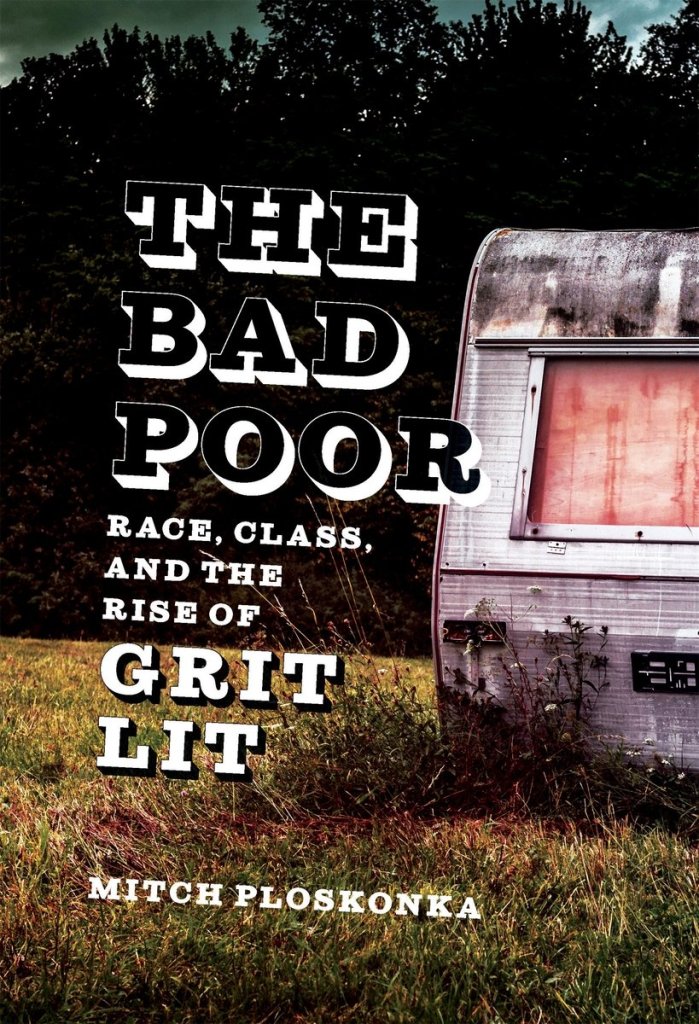
NONFICTION
The Bad Poor: Race, Class, and the Rise of Grit Lit
By Mitch Ploskonka
LSU Press
Published April 6, 2026


